
Queensland Aphasia Research Centre (QARC)
Optimising the lives of people with Aphasia
Conversations About Care
This project aims to design interventions to improve conversations about care in community and residential aged care settings.
What is the research about?
- It is important for older people and care workers to communicate well with each other.
- This can be difficult.
- The research team was to create and test resources to help people communicate well with each other.
Research stages
The research will have 3 stages:
- Stage 1a: Gathering experiences
- Stage 1b: Gathering evidence
- Stage 2: Co-design and consensus
- Stage 3: Usability and effectiveness training.
See a visual overview of the 3 stages of of the Conversations about Care project. (PNG, 96.4 KB)


Progress
Stage 1A - Gathering experiences
Project lead: Dr Michelle King
The team has talked with people about their experiences with aged care services.
The team found out about:
- Key conversations in their aged care journey
- What has helped communication
- What has made communication harder.
The team visited 2 community aged care services, 2 residential aged care services, and 2 healthcare services, and spoke to:
- 27 older adults receiving aged care;
- 26 family members or significant others;
- 26 aged care staff;
- 4 allied health clinicians.
People shared their experiences of 5 key moments that matter and interactions when good communication is critical to quality aged care support:
• Everyday interactions
• Care planning
• Having important conversations
• Making decisions and being heard
• Giving feedback and making complaints.
3 roundtables were held in 2025 for people to talk about the issues, policies and practices impacting people with communication support needs accessing aged care.
• Roundtable 1: Exploring publicly appointed decision-making in aged care: consensus on priorities for law and practice.
• Roundtable 2: Formal decision makers and supported decision making in aged care: Priorities for law and practice.
• Round table 3: feedback and complaints and people with communication support needs.
See a visual summary of roundtable 3 (PDF, 1.1 MB)
Stage 1b: Gathering Evidence
We conducted 2 scoping reviews, studies that searched for all the existing research on a topic.
Topic 1: What makes communication hard for older adults in aged care?
We found that combinations of:
• Health problems (e.g. dementia)
• Challenges to body functions (e.g. hearing problems)
• Personal factors (e.g. culture or gender)
• The environment around a person (e.g. health services)
Were reported to come together and impact communication for older adults in aged care settings.
Read the Scoping Review on Factors That Make Communication Hard in Aged Care
Read an accessible summary of the Factors that Make Communication Hard in Aged Care
Topic 2: What are the available Communication Partner Training Programs for aged care workers?
We found that:
• Most programs train people to communicate with older adults with specific communication needs, like dementia or aphasia
• No programs were found that focus on communicating better with people of different cultures or languages
• Few programs focus on communicating better with people of different age groups.
These results mean that there is a need to develop a communication training program for aged care staff so that they can communicate better with older adults with complex communication support needs.
Read an accessible summary of the Review of Communication Partner Training for Aged Care Workers
Read Scoping Review on Communication Partner Training for Aged-Care Workers (PDF, 896.7 KB)
Stage 2 – Co-design
The team are now working together with people with living experience of aged care to design interventions to improve communication in aged care settings.
The team are co-designing:
• a Communication Support Needs and Preferences Tool
• a web-based communication training program for the aged care workforce
• Co-developing communication guidelines for aged care.
The people involved are:
• People receiving aged care services
• Family of people receiving aged care services
• Aged care workers
• Aged care managers
• Allied health professionals
• Experts with clinical and research experience in aged care and/or communication training.
See a visual summary of the co-design process (PDF, 1.3 MB)
1. Co-design of the Communication Support Needs and Preferences (CommSNAP) tool
Project lead: Dr Lauren Fothergill
• Co-design workshops were held from July to September 2025
• The prototype CommSNAP Tool will be pilot tested in early 2026.
2. Co-design of the Communication Support Training and Resources for staff working in aged care (CommSTAR)
Project leads: Dr Kyla Hudson, Dr Sally Zingelman and Pippa Evans
• Co-design workshops to develop a blueprint for CommSTAR were held from September to December 2025
• The prototype CommSTAR training program will be pilot tested in mid-2026.

Communication Partner training programs work to teach the people around the individual how they can support communication.
3. Guidelines for communication-accessible conversations about care
Project lead: Dr Michelle King
• A forum will be held in June 2026 to establish guidelines to support communication-accessible conversations about care in aged care
• We will use consensus methods to agree on guidelines with people with living experience, experts, and clinicians
• The format and design of accessible materials for the guidelines will be co-designed in 2027.
Future directions
Stage 3: Usability and effectiveness testing.
In 2027, we will test:
• The CommSNAP tool
• The CommSTAR communication partner training
• The CommGUIDE accessible guideline materials.
To find out if they work well, and how easy they are to use.
Expected outcomes
The team aims to develop a tool kit of resources that will help communication in aged care.
The resources will be:
- Tailored
- Easy to use
- Effective.
Contact
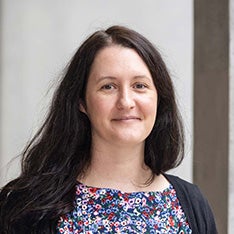
Get in touch with Associate Professor Sarah Wallace to learn more.
Email conversationsaboutcareproject@uq.edu.au
Funding and acknowledgements
Conversations About Care is funded by:
- Medical Research Future Fund (MRFF) Dementia, Ageing and Aged Care grant (APP2015728; 2022-2027)
- Dementia Centre for Research Collaboration seed grant (2021-2023).
Associate Professor Wallace is supported by a National Health and Medical Research Council (NHMRC) Emerging Leadership Investigator Grant (1175821).
Partner organisations
We are grateful for the support of our partner organisations:
Media and awards
Team
Chief investigators
- Associate Professor Sarah Wallace
- Professor Louise Hickson
- Professor Victoria Palmer
- Professor Deirdre Fetherstonhaugh
- Professor David Copland
- Associate Professor Anthony Angwin
- Dr Kirstine Shrubsole
- Professor Joanne Wood
- Associate Professor Nerina Scarinci
- Dr Samantha Siyambalapitiya
- Associate Professor Asad Khan
- Dr Peter Worthy
- Associate Professor Geoff Argus
- Dr Arpana Arjunan
Associate investigators
- Dr Bonnie Cheng
- Kym Torresi
- Sam Edmonds
- Silvia Holl
- Associate Professor Erin Conway
- Dr Barbra Timmer
- Sandra Glaister
- Michelle Ryan
- Julie Cameron
- Dr Michelle King
- Dr Asmita Manchha
- Dr Amy Coe
- Bridget Burton
- Dr Kyla Hudson
- Dr Sally Zingelman
- Pippa Evans